What is a Spinning Frame Machine and How Does It Work?
The Spinning Frame Machine plays a crucial role in textile production. It is designed to turn fibers into yarn, a vital step in creating fabric. This machine works by stretching and twisting fibers together, enabling the formation of strong, usable yarn.
Understanding how the Spinning Frame Machine operates involves looking at its key components. It uses spindles to twist the fibers while providing consistent tension. The process also requires careful monitoring to avoid defects. An imperfect twist can lead to weak threads, making it an area for improvement.
Overall, the Spinning Frame Machine is essential, yet complex. The machinery is impressive, but there are limitations in its efficiency. Crafting high-quality yarn depends on both technology and operator skill. Exploring these aspects reveals the machine's intricate balance of precision and craftsmanship.
What is a Spinning Frame Machine?
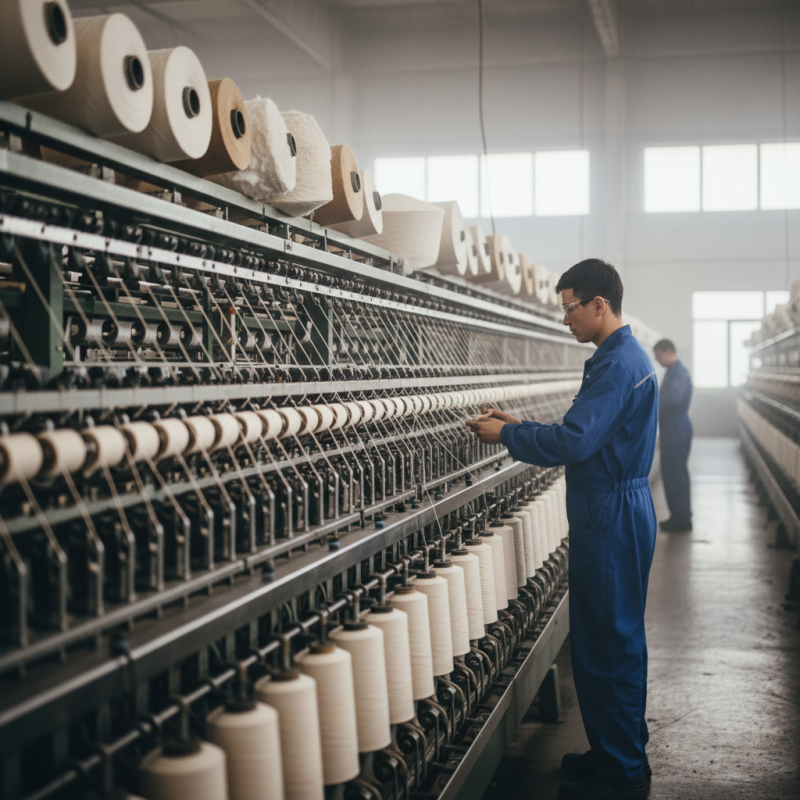
A spinning frame machine is an essential tool in textile manufacturing. It is designed to turn fiber into yarn. This process involves several steps, transforming raw materials into threads suitable for fabric production. The machine operates by drawing out the fibers and twisting them together, creating a continuous strand.
These machines utilize multiple spindles to increase production efficiency. Each spindle can work on a separate strand, enabling large-scale yarn production. Spinning frames typically have a roving supply mechanism, which feeds the fibers smoothly into the spinning zone. As fibers pass through rollers, they are elongated and twisted. This twisting action strengthens the yarn.
Despite its efficiency, the spinning frame machine is not without issues. It requires regular maintenance to prevent breakdowns. Misalignment of spindles can lead to uneven yarn quality. Operators must also monitor tension levels. A lack of attention may result in weak spots in the yarn. Overall, the spinning frame machine plays a crucial role, yet it demands careful oversight to function optimally.
Production Capacity of Different Spinning Frame Machines
Historical Development of Spinning Frame Machines
The history of the spinning frame machine traces back to the late 18th century. Early machines were simple and relied heavily on manual power. These initial designs made yarn production tedious and inefficient. Artisans sought better methods, leading to innovation in textile machinery.
In 1764, James Hargreaves invented the spinning jenny, revolutionizing yarn production. This development laid the groundwork for more complex spinning frames. The spinning frame itself was introduced by Richard Arkwright in 1771. His machine, powered by water, greatly increased productivity. Despite its advantages, Arkwright's design faced challenges. Early machinery was often prone to breakdowns, causing delays and frustration.
The evolution of spinning frame machines didn't stop there. The 19th century saw further improvements with steam power and mechanization. Manufacturers faced constant pressure to enhance efficiency. However, these advancements sometimes sacrificed worker safety and comfort. As machines became more central to production, the human element was often overlooked. This history reflects both triumphs and struggles within the textile industry.
Key Components of a Spinning Frame Machine
A spinning frame machine is essential in the textile industry. Its primary function is to spin fibers into yarn. This process is intricate, involving several key components that work together.
The drive mechanism is among the most critical parts. It transfers power from the motor to the moving parts. Without it, the entire machine would be non-functional. The spindles are another vital element. They hold the bobbins and rotate at high speeds. This rotation twists the fibers together to form a continuous strand. The draft rollers control the fiber feed, ensuring uniform tension, which is crucial for quality yarn.
Another component is the winding unit. It collects the finished yarn onto spools or cones. This step should not be overlooked. The winding process affects the yarn's strength. Improper tension can lead to weak spots. Lastly, sensors are often integrated for monitoring. They help detect issues in real time but can sometimes create false alarms. Balancing efficiency and accuracy in these components remains a challenge in production. Each part, while functional, has its quirks, urging constant evaluation for improvements.
The Operating Principles of Spinning Frame Machines
The spinning frame machine is a crucial device in the textile industry. It transforms fiber into yarn through a process called spinning. The fundamental principle lies in drawing out and twisting fibers together. This process creates a strong and uniform yarn, ready for weaving or knitting.
Spinning frames operate by using a series of rollers. The fiber is fed into these rollers, which pull it into a thinner strand. As the strand is drawn out, it is twisted to increase strength. The tension is important here. Too little tension can lead to weak yarn, while too much can break the fibers.
Tip: Always monitor the fiber's consistency. Variations can affect the final product.
It’s worth noting that adjusting settings on the spinning frame requires practice. Beginners may find it challenging to strike the right balance. Sometimes, it might take several attempts. Understanding the nuances of different fibers can also improve outcomes.
Tip: Keep a detailed log of settings and results. This will help refine the spinning process over time.
Despite its automation, human oversight is necessary. Operators must ensure that the machine runs smoothly. Small mistakes can lead to large-scale waste. Regular checks can save time and resources.
Applications and Impact of Spinning Frame Technology
Spinning frame technology has reshaped the textile industry. This machine transforms raw fibers into yarn. It is an efficient process that increases production speed and reduces labor costs. Across factories, spinning frames are integral, producing a wide range of textiles, from clothing to industrial fabrics.
In modern applications, these machines support eco-friendly practices. They can utilize recycled fibers, reducing waste. This aligns with sustainable goals in manufacturing. Moreover, spinning frames facilitate automation, leading to consistent quality. However, companies must assess the energy consumption involved. It's essential to balance the benefits with environmental impact.
Tips to consider: Always monitor machine efficiency. Regular maintenance prevents breakdowns. Keep an eye on fiber quality to ensure optimal results. Embrace advancements, but be cautious of over-reliance on automation. Human oversight remains crucial for quality control.
What is a Spinning Frame Machine and How Does It Work? - Applications and Impact of Spinning Frame Technology
| Dimension | Details |
| Machine Type | Spinning Frame |
| Primary Function | Convert fiber into yarn |
| Technology Used | Mechanical spinning technology |
| Materials Processed | Cotton, wool, synthetic fibers |
| Production Rate | Up to 1000 kg of yarn per day |
| Applications | Textiles, knitting, weaving |
| Impact on Industry | Increased efficiency and production quality |
| Innovations | Automated bobbin changing, sensor integration |


 No. 85 “Alexander Malinov” Blvd,
1715 Sofia, Bulgaria
No. 85 “Alexander Malinov” Blvd,
1715 Sofia, Bulgaria +359 2 953 0387
 sale@chemicalmojo.com